
Southwire MULTIMETER-600V MANUAL RANGING 12volt, 110 volt, Ohms & Amps

- SKU:
- 10031S
- Availability:
- Usually Ships in 1-2 Business Days
- Weight:
- 1.50 LBS
- Shipping:
- Free Shipping




Description
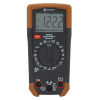
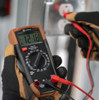
Southwire Multi-Range Multimeter 10031S - Perfect for RVers
The Southwire 10031S is a basic, manual-ranging digital multimeter designed for everyday electrical troubleshooting (a good “starter/utility” meter).
What it measures (core functions)
Southwire lists 7 functions / 19 ranges, covering: AC & DC voltage, DC current, resistance, continuity, plus 1.5V and 9V battery test.
Key specs that matter in real use
- Manual ranging (you pick the range vs. auto-range).
- 2000-count LCD (basic resolution class).
- AC voltage is “average responding” (not True RMS). This can read off on non-sinewave AC (some inverters / generators).
- AC bandwidth: 45–400 Hz.
- Auto power off: ~15 minutes.
- Continuity beeper around ~30 Ω or less.
- Input impedance: ~10 MΩ on AC/DC volts.
- Voltage/current limits (important for safety)
From the manual’s Input Limits table:
- Volts (AC/DC): up to 600 VAC RMS / 600 VDC
- mA input: fused (0.5A fast-acting, listed as 660V AC/DC fuse rating)
- 10A input: fused (10A fast-acting, plus duty-cycle limits—short bursts only at higher currents)
CAT rating note (why you may see conflicting listings):
- Southwire’s product page states CAT III 300V.
- The manual also shows the meter can measure up to 600V (max input), which is different from the measurement category rating used for transient protection.
- Bottom line: for typical RV work (12V DC and 120V AC), you’re well within both.
Accuracy (quick feel)
From the specs table (high-level):
- DC volts: as tight as ±(0.5% + 5 digits) on the 2.000V range, and ±(0.8% + 5 digits) on higher ranges.
- AC volts: listed around ±(1.2% + 10 digits) (average-responding; sinewave assumption).
- DC amps: about ±(1.0% to 2.0% + digits) depending on range.
Durability/convenience features
- Double-molded housing, drop tested to 2 meters
- Kickstand and optional magnetic hanging strap accessory
- 5-year warranty
- Southwire even lists replacement fuse part numbers (helpful if you blow one):
Is it a good meter for RV troubleshooting?
Yes—for battery voltage checks, parasitic draw basics, fuses/continuity, outlet voltage, converter output checks, etc.
Two “gotchas” for RVers:
- Because it’s average responding (not True RMS), readings can be misleading on modified sine wave inverters or “dirty” power.
- Being a manual range, it’s a little slower/easier to mis-set than an auto-ranging meter (especially when you’re bouncing between 12V and 120V systems).
That’s a solid “basic RV owner” meter for exactly that use case—12V DC, 120V AC, and resistance/continuity—as long as you set expectations and give people a simple “how to not mess this up” quick-start.
Best for RV Use:
- Covers the 3 checks RV owners actually do: battery/charging voltage (DCV), outlet/shore power voltage (ACV), and “is this fuse/wire/switch open?” (ohms/continuity).
- Manual ranging keeps costs down and is fine for occasional checks once they know the right ranges.
- Not True RMS usually doesn’t matter for standard campground pedestal power; it can matter on some inverters/generators (more on that below).
The 30-second “RV Quick Start”:
Black lead in COM always.
- Red lead in VΩ jack for volts/ohms (don’t put it in the amp jack unless they’re measuring current).
1) Check 12V battery / converter charging (DC volts)
- Dial to DCV.
- Range: 20V DC (or the next range above 15V if it’s a different scale).
- Touch probes to battery posts: red to +, black to –.
-
“What numbers mean” (simple):
- Resting battery: roughly 12.6V full, ~12.2V about half, 12.0V low
- Charging: typically 13.2–14.6V depending on converter/charger mode
2) Check 110/120V outlet or pedestal (AC volts)
- Dial to ACV.
- Range: 200V AC (or 600V AC if they’re unsure—starting higher is safer on a manual-range meter).
- Hot-to-neutral at an outlet should be around 110–125V.
- Simple outlet sanity checks (if they’re comfortable):
- Hot-to-ground ≈ same as hot-to-neutral
- Neutral-to-ground ≈ near 0V (small is normal)
3) Check a fuse/wire/switch (ohms or continuity)
- Power OFF the circuit first (battery disconnect off and/or unplug shore power).
- Dial to Ω or continuity beep.
- “0–a few ohms / beep” = good connection.
- “OL / no beep” = open circuit (broken wire, blown fuse, bad switch).
Two big safety warnings worth putting on a little card
- Never measure ohms/continuity on a live circuit. That’s the #1 way people blow fuses in the meter or get false readings.
- Never try to measure AC volts with the red lead in the “A/10A” jack. That’s how meters get damaged (and it can be dangerous).
The honest limitation (and how you can frame it)
- Not True RMS: If an RVer is measuring voltage from a modified-sine inverter (or certain generators), the AC reading may be inaccurate. Most RVs use pure sine-wave inverters.
- How to say it: “Great for shore power and basic checks. If you’re performing a lot of inverter diagnostics, consider upgrading to a True RMS meter.
Related Products
Related Products
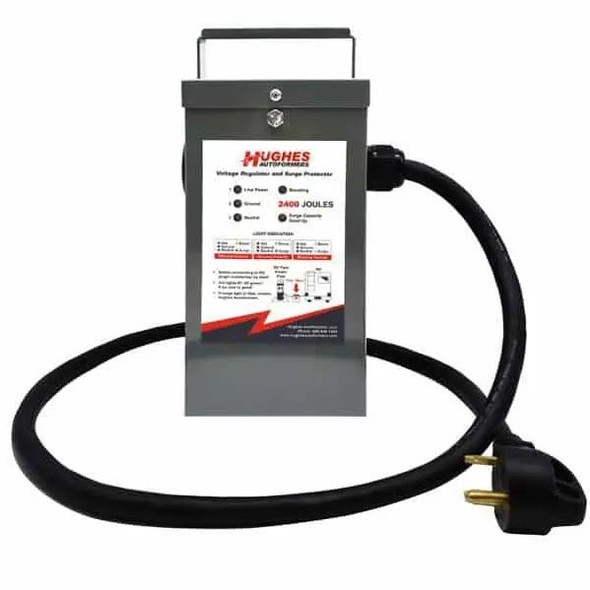

Hughes 30 Amp Voltage Booster with Surge Protection
Hughes Power Watch Dog


Hughes 50 Amp RV Voltage Booster with Surge Protection
Hughes Power Watch Dog


Hughes Power Watchdog 30 Amp Voltage Controller Power Center
Hughes Power Watch Dog


Hughes Power Watchdog 50 Amp Voltage Controller Power Center
Hughes Power Watch Dog

